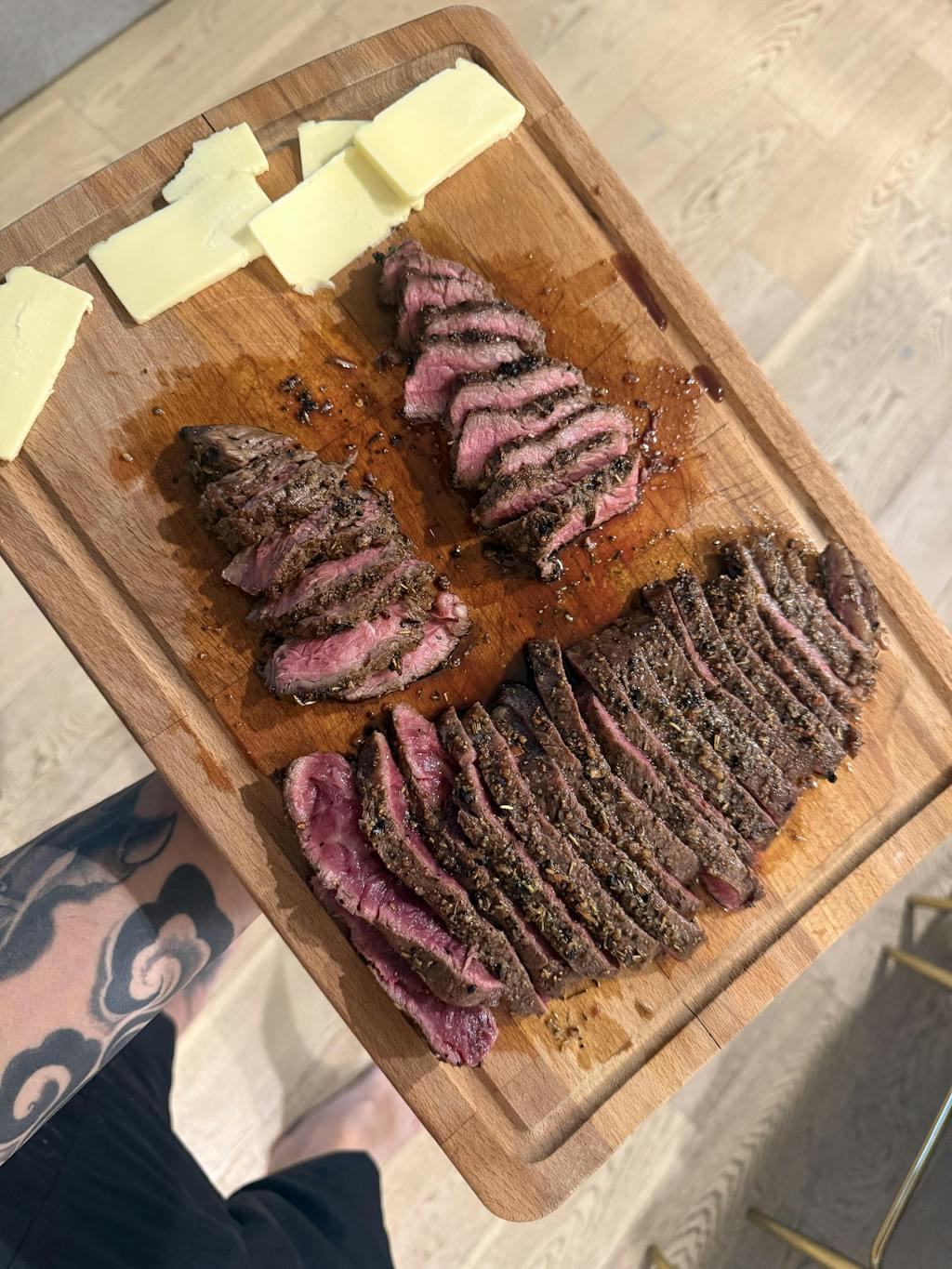
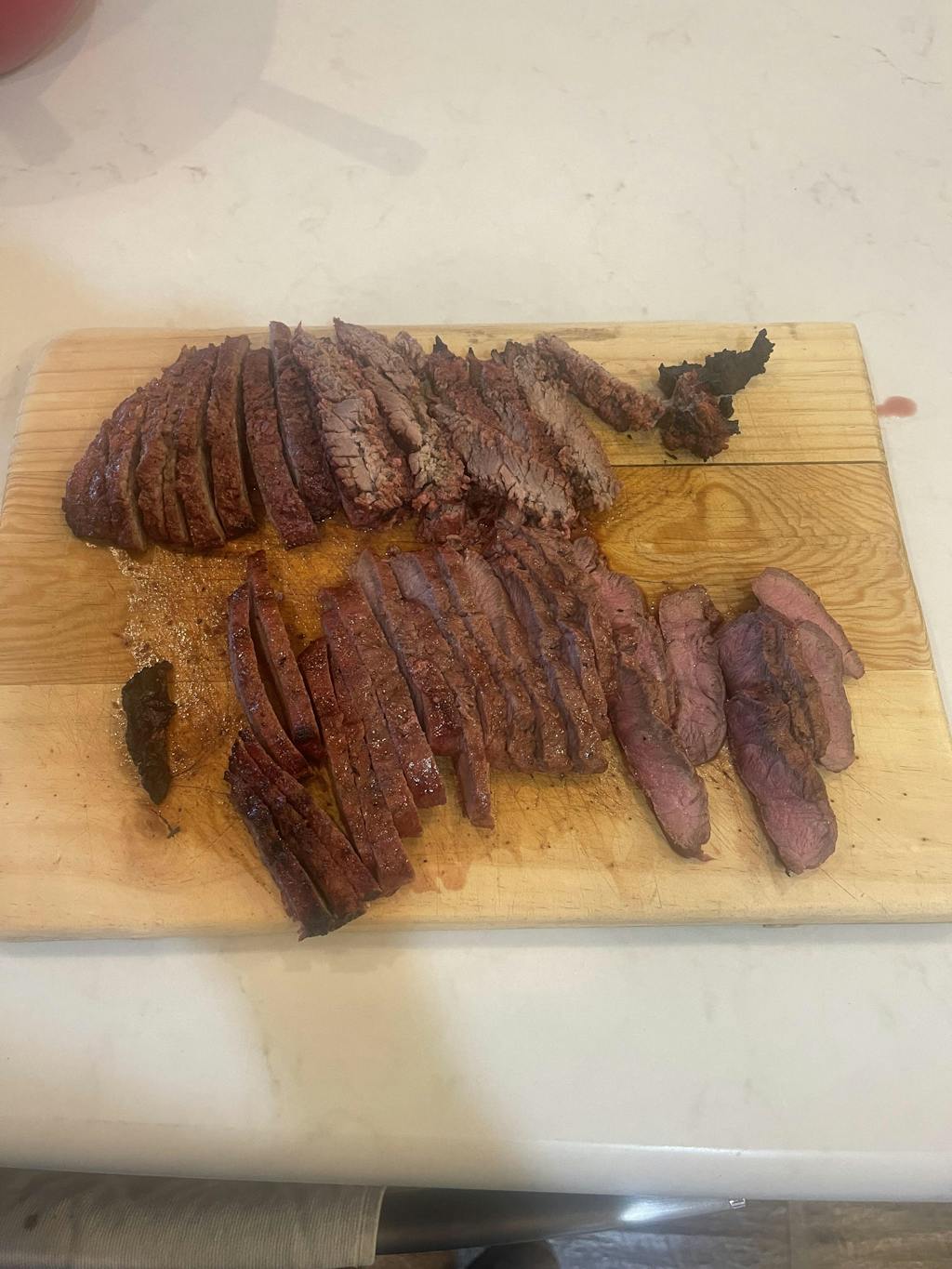
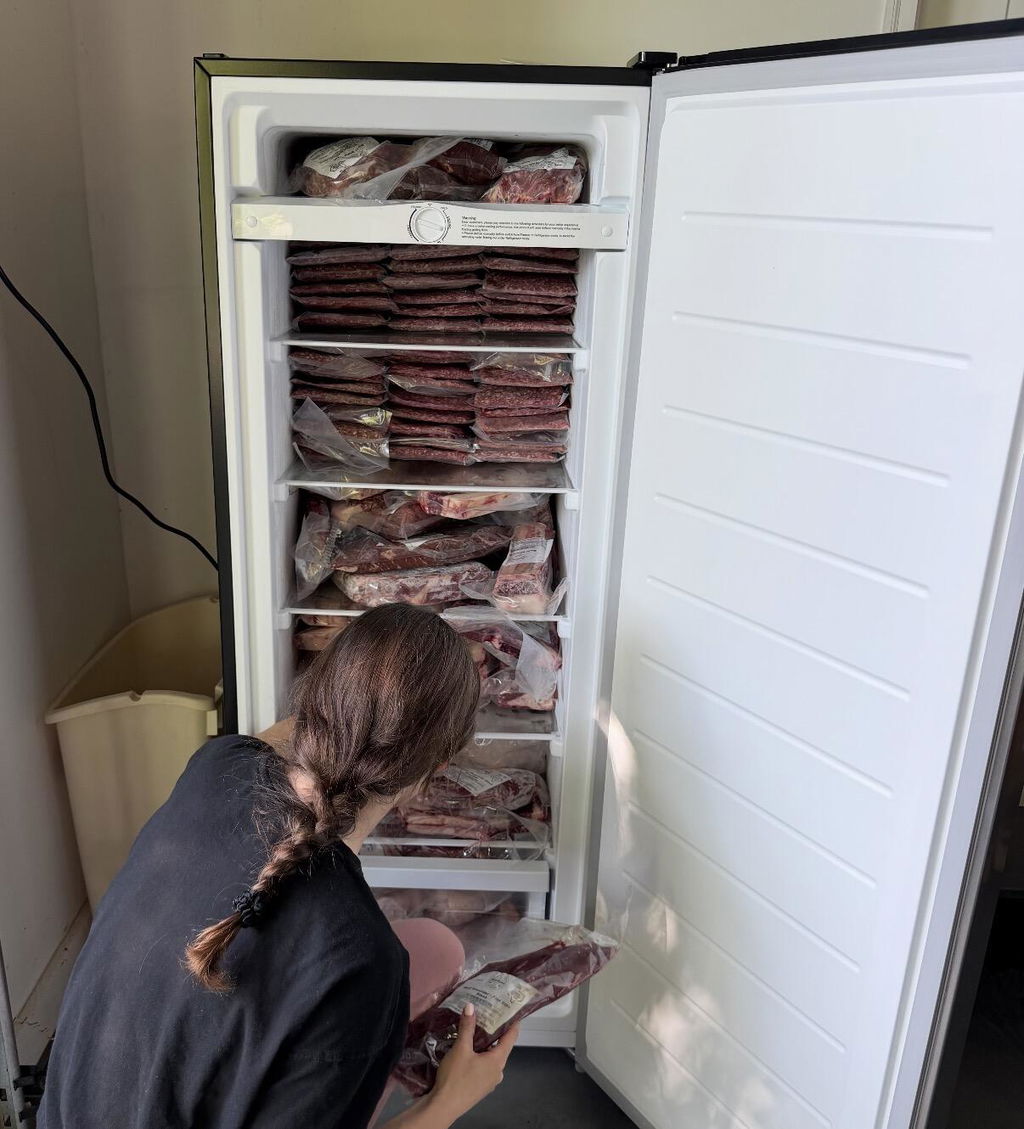
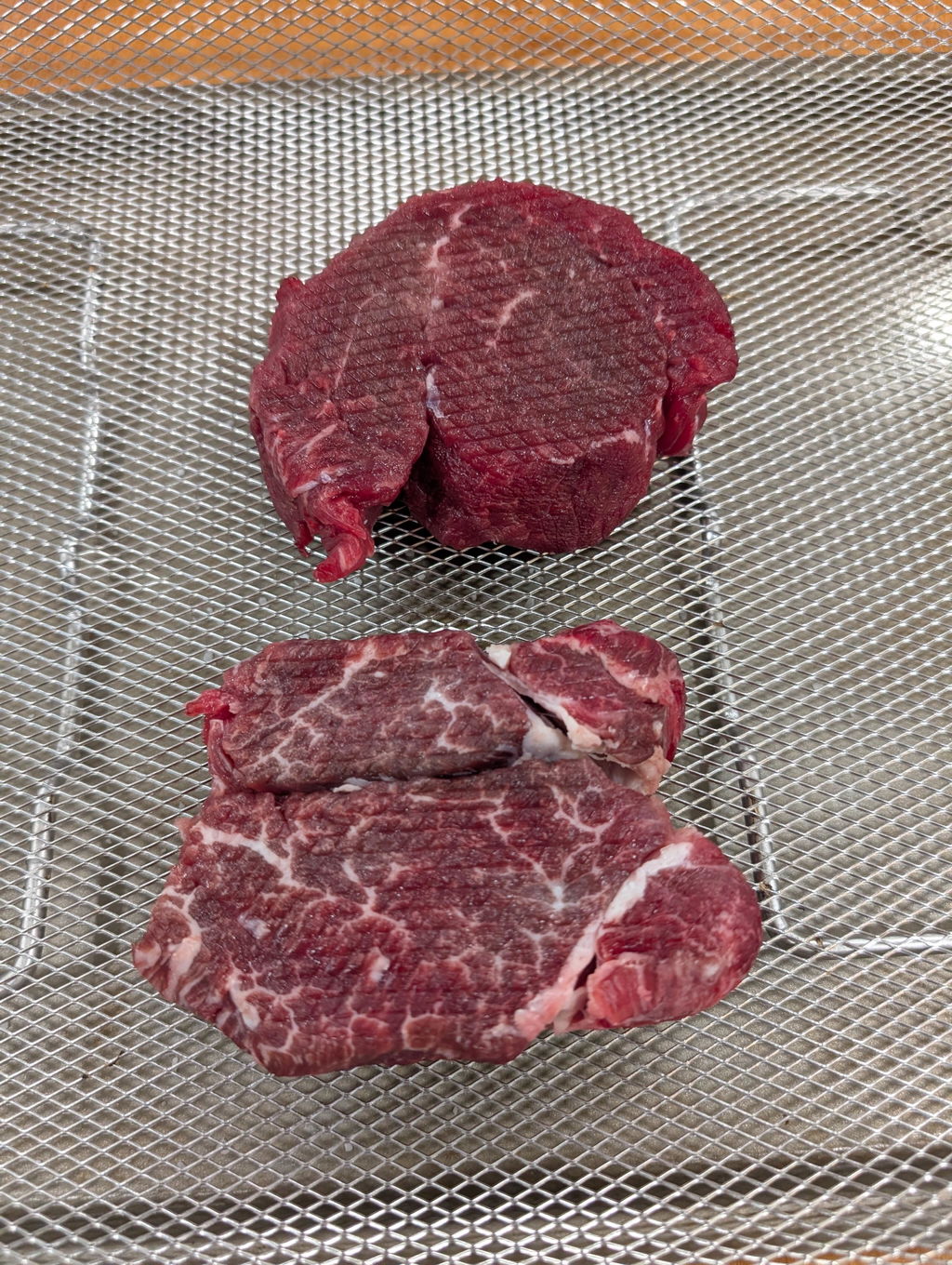
A half cow (aka one half beef "share") can put 240 pounds or more of packaged beef in your freezer. That take-home amount gives you a broad mix of steaks, roasts, slow-cooking cuts, brisket, short ribs, and ground beef rather than 240 pounds of ribeyes. For families that cook beef several times a week, it can cover most of a year's meals. That 240 pounds is take-home weight, not the number your processor will quote you first.
What this article covers
- Hanging Weight vs Take-Home Weight
- What Cuts Come With Half a Cow
- How Much Freezer Space You Need
- How Long Half a Cow Feeds a Family
- How the Cost Compares With Grocery Store Beef
- How the Cut Sheet Works
- The Beef Behind the Numbers
- Put the Full Freezer to Work
- Frequently Asked Questions
Hanging Weight vs Take-Home Weight
Hanging weight is what the carcass weighs before we age, trim, cut, and package it. It is a useful number for you to use when calculating your cut yield or dressing yield, but it is not what ends up in your freezer.
Take-home or actual product weight is what you actually carry home, usually about 65 to 70 percent of the hanging weight. Aging drives off moisture. Trimming takes off excess fat. Boneless cuts weigh less than bone-in. Your cut sheet (the instructions telling the processor how to cut your beef) choices change the number too, so two animals with the same hanging weight can send home different amounts.
Our ½ American Wagyu beef share is listed at 240-plus pounds of packaged beef, so you can plan freezer space and meal use around the amount coming home rather than trying to estimate it from hanging weight.

What Cuts Come With Half a Cow
A realistic half-share breakdown is about 25 percent steaks, 45 percent roasts and slow-cooking cuts, and 30 percent ground beef. Applied to a 240-pound share, that works out to approximately 60 pounds of steaks, 108 pounds of roasts and other slow-cooking cuts, and 72 pounds of ground beef.
| Beef Category | Approximate Share | Approximate Weight From 240 Pounds | Cuts You Might Get |
|---|---|---|---|
| Steaks | 25% | 60 pounds | Ribeye, chuck eye, flat iron, Denver, flank, skirt, sirloin, T-bone, Porterhouse, or tri-tip |
| Roasts and slow-cooking cuts | 45% | 108 pounds | Chuck and shoulder roasts, brisket, short ribs, country-style ribs, shanks, stew meat, beef tips, and oxtail |
| Ground beef | 30% | 72 pounds | Individually packaged ground American Wagyu beef |
Brisket and short ribs are part of the slow-cooking portion rather than separate additions to the total. Bone-in steaks and ribs affect package shape and freezer organization.

How Much Freezer Space You Need
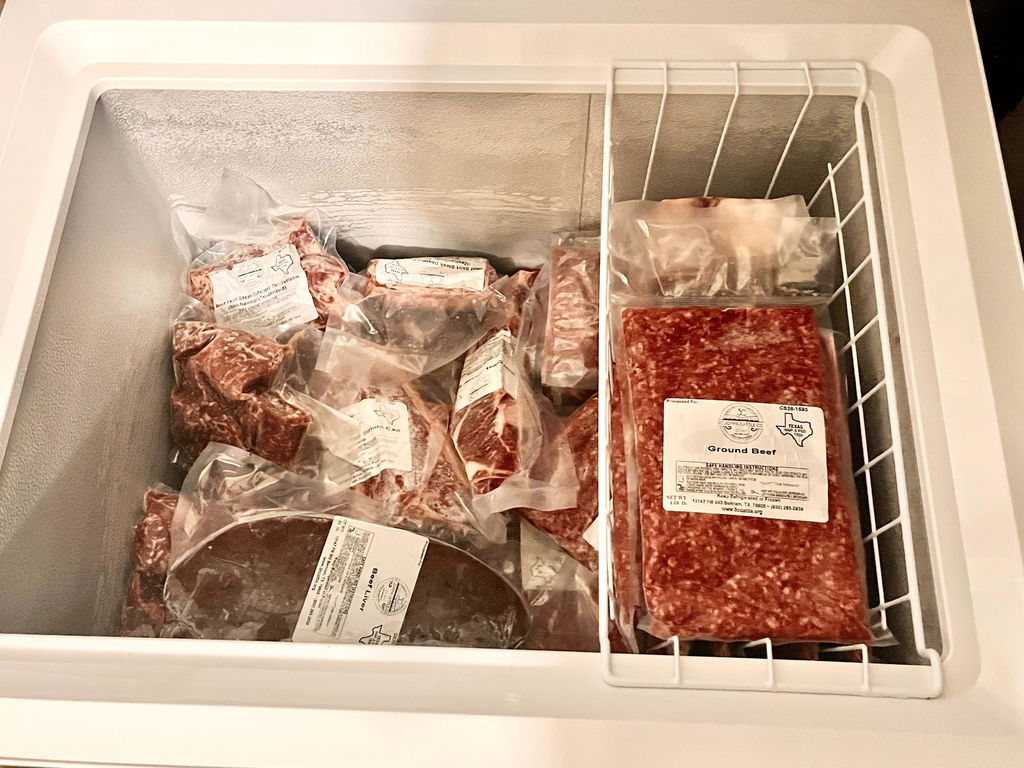
Plan on 7 to 8 cubic feet of freezer space for half a cow. A chest freezer, an upright, or a second freezer alongside your kitchen refrigerator, or in the garage, all work. Clear the space before delivery and leave enough room to sort packages by category. Use baskets or dividers to separate steaks from roasts and rotate older packages forward.
If that amount of freezer space or beef feels larger than your household needs, a ¼ American Wagyu beef share provides 120-plus pounds. An ⅛ American Wagyu beef share provides 60-plus pounds and is another practical starting point for a smaller household or first bulk order. Whichever size you choose, the next thing to work out is how long it lasts.

How Long Half a Cow Feeds a Family
The answer depends on how often beef is served and how much your family eats. A household using 4 pounds per week can stretch 240 pounds across about 60 weeks. At 6 pounds per week, the same share lasts about 40 weeks. Families that eat beef daily, host large gatherings, or cook whole briskets regularly will move through it faster.
Think in weekly use rather than servings per package. Use ground beef for burgers, tacos, and chili during the week. A roast can provide dinner plus leftovers. Steaks, brisket, and short ribs can then be saved for weekends or larger meals without leaving everyday cooking short on options. A share that size also has to make sense on price.
How the Cost Compares With Grocery Store Beef
Check the current price on the ½ American Wagyu beef share page, then divide it by 240 pounds to estimate your cost per pound. That average covers premium steaks, brisket, ribs, roasts, and ground beef together, with standard processing and shipping included.
For a fair grocery comparison, price the same mix of cuts at the quality you normally buy. Include any processing and delivery charges. How much of your share comes back as steak instead of ground beef is partly your call.
How the Cut Sheet Works
Once your deposit is in, we discuss the various cuts you will receive, or in the case of a whole beef share purchase, we put you straight in touch with the processor, so you give your cutting instructions yourself.
Discuss steak thickness, the number of steaks per package, roast size, ground beef package size, and whether certain cuts should remain bone-in. You can also discuss brisket preparation, short ribs, soup bones, organ meats, and whether less familiar cuts should remain whole or become ground beef. Decide how your household cooks before answering. Two-person meals need different package sizes than dinners for six.
The Beef Behind the Numbers
You know how full the freezer will be. Here is what is going into it. I'm Jeff (aka The Chief Beef Slinger), and my family has been ranching this land since 1907, right here in Joppa, Texas. We raise F1 American Wagyu cattle, a 50 percent Japanese Wagyu and 50 percent Registered Angus cross, chosen using DNA testing and expected progeny difference data (breeding records that predict how a bull's calves will turn out) for marbling, texture, and beef flavor.
Our cattle are grass-fed on native Texas pasture and non-GMO grain-finished for a minimum of 120 days. We handle them calmly, work with local processors we trust, and age the beef at least 14 days before it is vacuum-sealed. You can trace every package in your freezer back to our ranch, and you can call me and ask about it. Once the freezer is full, you need a plan for each kind of cut.
Put the Full Freezer to Work
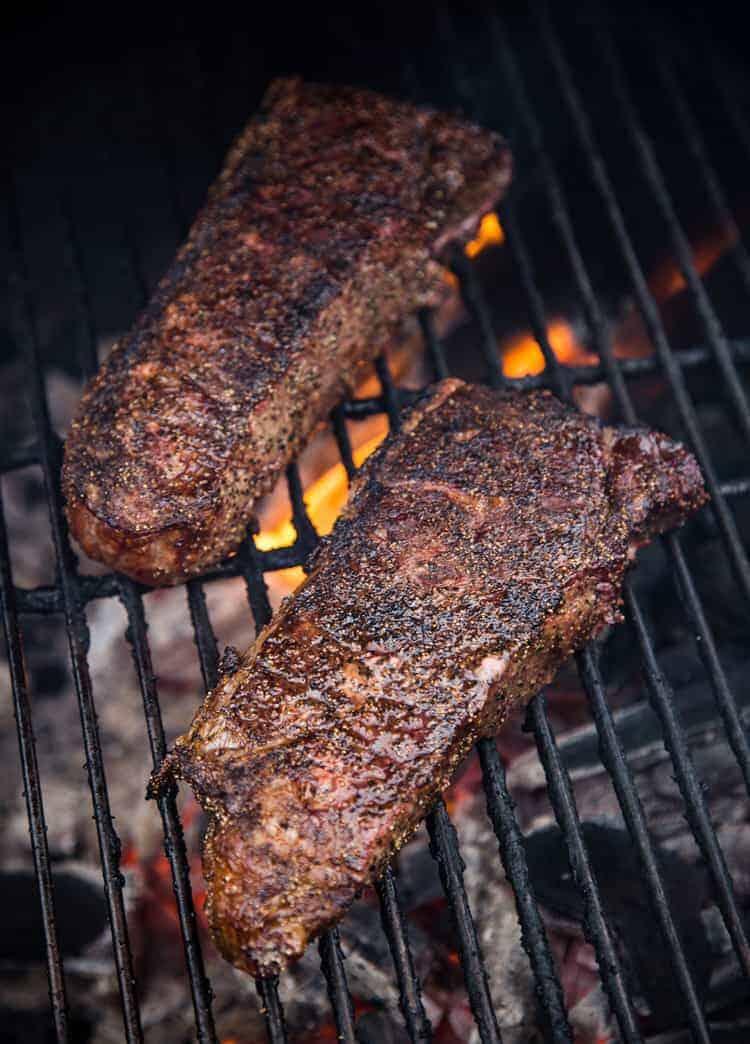
Match each cut to the right cooking method. Steaks suit fast, high heat. Brisket, short ribs, and chuck roasts reward patient smoking or braising. If you need the gear for those cooks, DDR BBQ Supply is a good place to start.
From our pasture to your plate. The Joppa Way.
Frequently Asked Questions
Can I Ask for a Half Cow to Be Cut Into Mostly Steaks?
You can influence the steak thickness, packaging, and whether some cuts remain whole, but the animal has a fixed amount of loin and rib meat. Cuts that are not kept as roasts or specialty cuts usually become ground beef rather than additional premium steaks.
Can Two Households Split a Half Cow?
Yes. Agree on package sizes and the division of premium cuts before completing the cut sheet. Splitting every package evenly is simple, while dividing individual briskets, tenderloins, and other limited cuts requires a little planning.
Are Bones and Organ Meats Automatically Included?
Ask when ordering because bones and organs need a specific request. Confirm which items are available and whether they are counted separately from the guaranteed packaged share weight.
Should I Choose Bone-In or Boneless Cuts?
Choose based on how you actually cook. Ask the processor which cuts suit your usual recipes and household portions.